
Design · September 3, 2026 · Really Hub
Brand identity: what it includes and how to build it
Brand identity is not a logo: it is a system of seven components. What it includes, how it is built in four phases, what it costs and when it is not worth it.
Brand identity is the coordinated set of elements a company presents itself with: name, logo, colors, typography, tone of voice, imagery and the rules that hold everything together. It is not a synonym for logo: the logo is only the most visible piece of a system that decides how the brand gets recognised and remembered at every touchpoint.
The misunderstanding is expensive. Companies invest in a logo restyling, launch it without a coherent system and end up with a graphic asset and no strategy behind it. This guide covers what a brand identity really includes, how it is built in four phases, what it costs, when it is not worth doing and how to measure the return.
What a complete brand identity includes
A professional brand identity is a system, not a list of disconnected elements. There are seven components: naming and logotype, the color palette with exact color codes for every format, institutional typography for headings and body text, the icon and imagery system, the tone of voice, templates for recurring materials (presentations, social, email, documents) and the guidelines that establish how each element is used in different contexts.
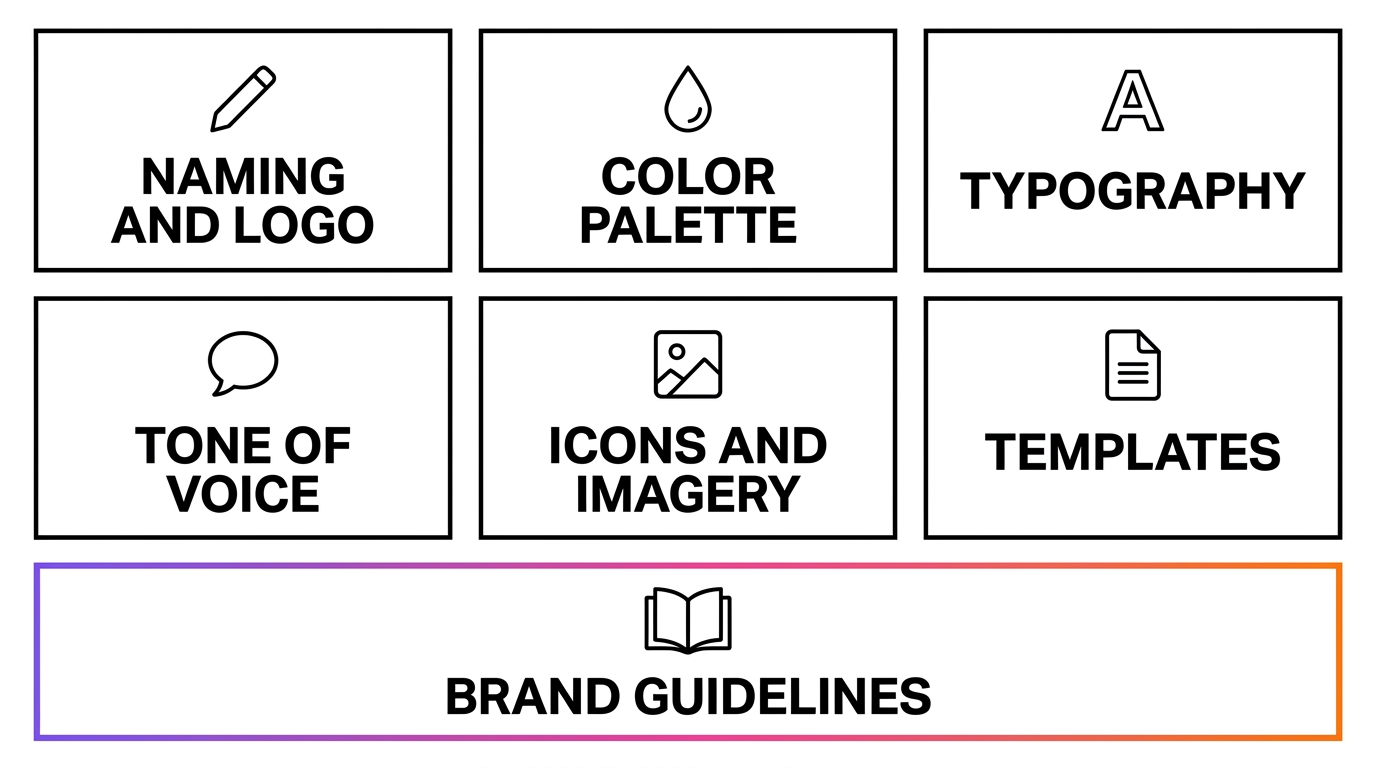
The last point is what separates a real identity from a folder of graphic files. Without guidelines every supplier interprets things their own way, and six months later consistency is gone. Each component communicates something precise: color carries emotion and values, typography signals register, tone of voice defines personality.
Brand identity and brand image: the difference
Brand identity is what the company deliberately builds through its communication choices. Brand image is what the public actually perceives. The two almost never coincide completely, but a well built identity narrows the gap between intention and perception.
Working only on image without touching identity is the typical mistake of reactive marketing: you chase negative perceptions instead of acting on the source, which is almost always unclear positioning or inconsistent communication.
How it is built: the four phases of the process
A serious project starts with research, not drawing. Phase one: analysis of the company, the industry and the audience. What you offer, to whom, with what advantage over competitors, which visual conventions dominate your market and which spaces are free. Phase two: positioning, meaning the distinctive space the brand wants to occupy in people's minds. Only then does phase three begin, design: alternative concepts, visual exploration, development of the full system and testing with real users.
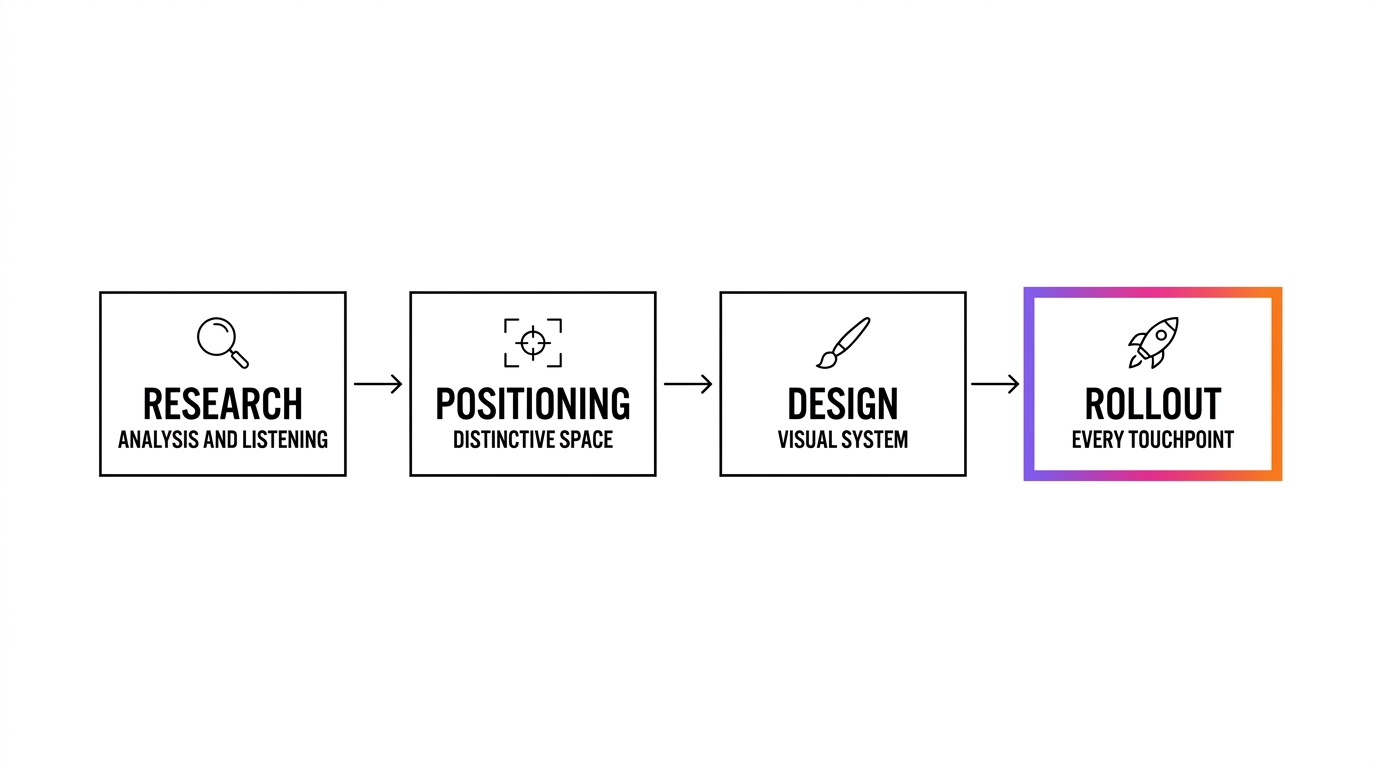
Phase four is rollout: applying the new identity to every touchpoint, from the website to the email signature, from packaging to sales decks. It is the most underestimated phase and often requires a budget comparable to the design work itself. The final deliverable of the project is the brand manual (or brand book): the document with all the specifications and usage rules.
How long it takes
For a startup or an SME without a structured identity history, a complete project closes in six to ten weeks with a dedicated team. A rebranding for a structured company, with multiple product lines and international markets, can take six to twelve months between internal workshops, customer research and rollout on existing materials. The variable that stretches timelines the most is not design: it is how fast the company makes decisions.
How much a brand identity costs
An essential but professional project for a startup or an SME starts at 5,000 to 8,000 euros. A more articulated identity, with multiple variants, many applications and a full brand book, rises to 15,000 to 40,000 euros. Rebrandings of large companies comfortably exceed 100,000 euros. The difference between bands is not aesthetic: it is the depth of the research and the seniority of whoever signs the system. The detail of the bands and fee models is in our guide on how much a communication agency costs.
When investing in a brand identity is NOT worth it
There are moments when an identity project is the wrong expense. If you have not validated product and market yet, the identity risks freezing a positioning that will change in six months: better a light, provisional solution. If the company is rethinking its strategy and does not know where it is going, postpone the project until the decision is made. And if the real problem is the product or the service, no visual system will hide it for long.
When a rebranding is needed
A rebranding is not done because the logo looks dated or because a new CEO with different tastes has arrived. There are four legitimate reasons: a substantial change of positioning, a merger or acquisition that requires unifying identities, the need to rebuild reputation after a crisis, or an identity that after years of evolution no longer reflects what the company has become. If you recognise yourself in one of these cases, our rebranding guide covers planning and measurement.
How to measure the return
The return on an identity investment is measured on four metrics: spontaneous and aided brand awareness (how many people know and recognise you), the public's willingness to pay a premium over competitors, customer retention and acquisition cost. A recognisable brand lowers the cost of every new conversion, because part of the persuasion work is already done before the first contact.
Frequently asked questions
What are the elements that make up a brand identity?
Seven: naming and logo, color palette, typography, tone of voice, icon and imagery system, templates for recurring materials and usage guidelines. A logo alone is not a brand identity.
What is the difference between brand identity and brand image?
Identity is what the company designs and controls. Image is what the public perceives. The first is built, the second is earned.
How do you create a brand identity?
In four phases: research on the company, the market and the audience; positioning; design of the visual and verbal system; rollout on all touchpoints. Skipping research is the most common mistake.
Do you need an agency to do it?
Not necessarily. You need three competencies: brand strategy, creative direction and copywriting. You can find them in an agency, in hand-picked freelancers or in an on-demand team. The comparison between models is in agency or freelancers.
If you are considering a brand identity project, the most efficient way is not necessarily an agency: with the right talents (a strategist, a creative director, a copywriter who knows your industry) you get a solid system with costs calibrated on real needs. That is the Really Hub model: see how we work on design and brand identity.
- #brand identity
- #logo
- #identità visiva
- #branding
- #brand image